
Backyards and Backwaters
The Nature of Pleasant Point


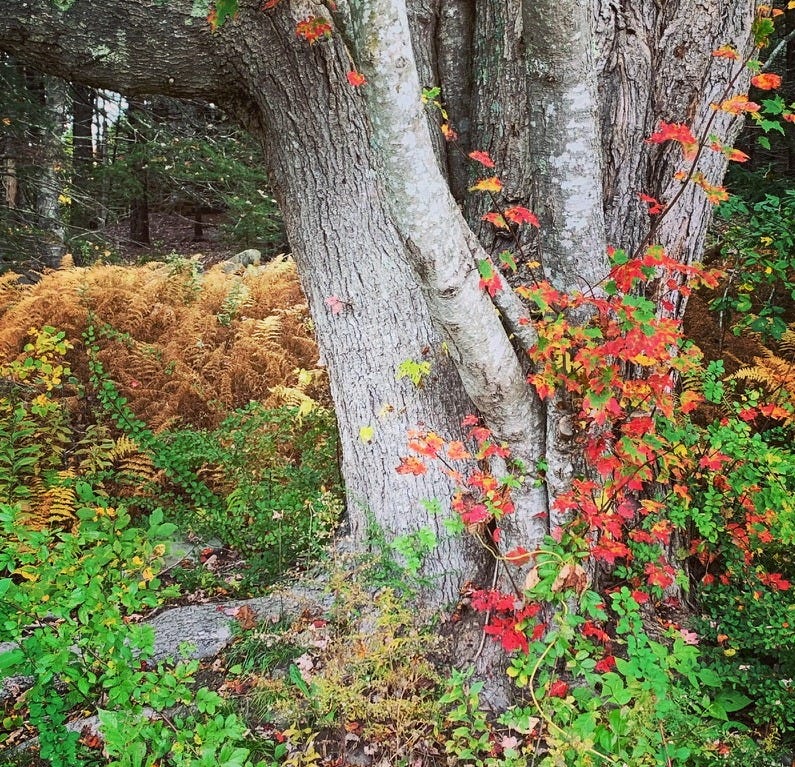
Summer is a dim memory now. Boats are hauled, the nights come quickly, and warblers have fled for warmer climates (as have some of our readers). In this issue, we look back at a different kind of summer bloom, talk turkey, and investigate some very local predators.
See you outdoors,
Rob Smith, Ted Piccone, Deb Morgan
Through the Binoculars: The Return of a Native – a Conservation Success Story
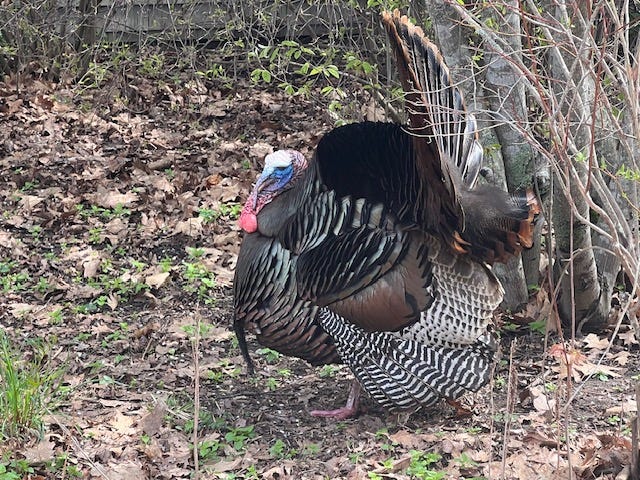
The Wild Turkey “has been extinct in Maine for so many years that we cannot accurately state when it ceased to exist here” (Ora Knight, Birds of Maine, 1908)
On August 25, Cushing residents Alan and Monika Magee witnessed a natural drama play out on the mud flats of Maple Juice Cove. A Bald Eagle swooped down and lifted off with a young turkey from a group that was starting to cross the end of the cove. This was a clash of two species that benefited from two co-incident but very different conservation success stories.
Until the last few decades, the only live turkeys you could see in Maine were scrawny white birds huddled around farm lots. They were not Wild Turkeys (Meleagris gallopavo), but domestic turkeys (Meleagris gallopavo domesticus). Meanwhile, Bald Eagles (Haliaeetus leucocephalus), following the banning of DDT, returned from a nadir of 400 pairs in the continental United States in the 1960s to over 70,000 today. In Maine, aerial surveys documented 41 nesting pairs of eagles in 1969; by 2018 there were over 700 (Vickery et al., Birds of Maine, Princeton University Press, 2020). Ben Franklin had something to say in a 1784 letter to his daughter about these two birds. Contrary to myth, he did not propose the Wild Turkey to be the national bird, but he did state he thought the turkey, “though a little vain and silly,” was the more courageous of the two species. The Bald Eagle, he stated, was a “bird of bad moral character” that stole other birds’ food.
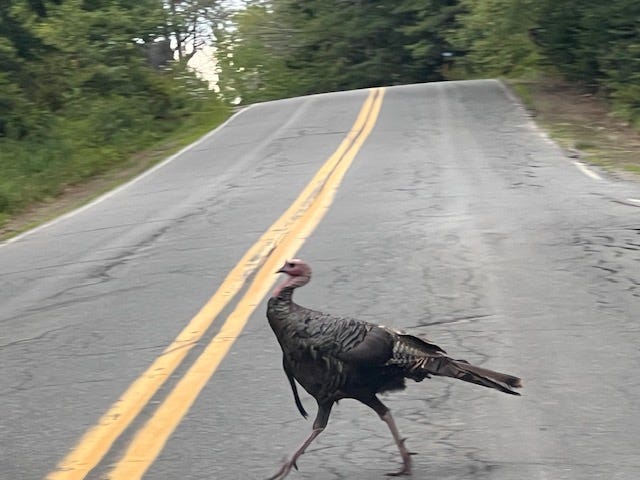
Wild Turkeys are ubiquitous in Cushing as they strut and peck by the roadside and in woods and fields from the tip of Pleasant Point all the way to Thomaston. Be prepared to brake for a group as they string along across the road. These groups are typically segregated by sex. In summer we see small bands of males or “toms” (their beards give them away), and separate groups of hens with young ones (known as “poults”) following in tow. These poults hatched from 12-18 eggs laid on the ground in late spring. With such sizable broods, Wild Turkey populations may swell by two-fold or more by the fall. During the first week of October, I observed a group of 16 birds composed of hens and their young visiting open areas along Davis Cove. In winter, these small groups aggregate to form larger flocks, in which males and females each form their own pecking orders.
The flocks may range for miles as they forage for insects, acorns, berries, snails and most anything else edible that they find as they overturn leaves or poke into the snow. In spring, gobbling toms strut about with puffed-up chest feathers and fan tails spread to appeal to females. Their courtship display includes loud vocalizations accompanied by dramatic behavior such as wing dragging. A tom’s head and neck may become vividly colored as the snood (the appendage over the bill) enlarges and turns red while the face and head become bright blue. At a time of peak excitement, the turkey’s head and neck may turn white. Wild Turkeys are polygynous, with males often mating with several females. Once eggs are laid, the hens are solely responsible for incubating the eggs and will then stay with the poults for months until they mature.
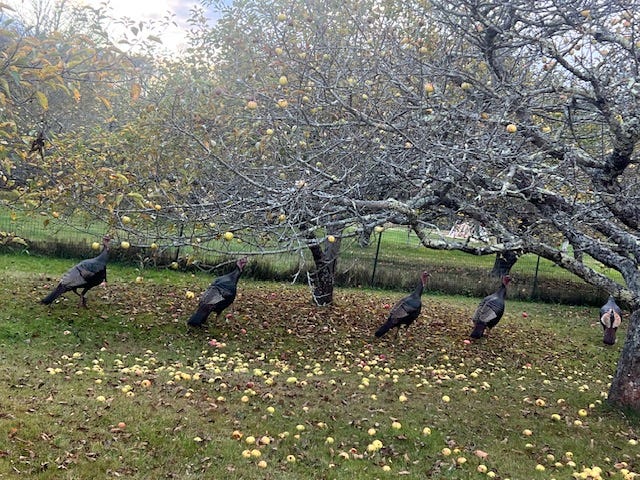
The return of Wild Turkeys to New England is remarkable. Due to deforestation and hunting, their populations underwent an abrupt decline soon after European colonization of New England. By the early 1800s, Wild Turkeys were reported to be scarce in most of the region, and on the way to total extirpation from all New England states by the start of the 20th century.
Their previous range in Maine was believed to include York and Cumberland counties, and some other more eastern coastal areas. Though we often see them foraging in fields, Wild Turkeys are predominantly woodland birds that roost in trees at night. They prefer hardwood forests of oak and beech. As the woods disappeared, so did the turkeys. Believed to be extinct in Vermont by 1842, the last one sighted in Massachusetts was shot on Mt. Tom in 1851. After several unsuccessful attempts, Wild Turkeys were reintroduced to Maine in the late 1970s with the release of a small flock of 41 birds captured in Vermont, where they had been re-introduced in the late 1960s. They thrived, and were established in the Midcoast by the 1990s. Today, Wild Turkeys occur in all 16 counties in Maine and their population is estimated to be about 70,000. They are abundant in areas that offer a mix of fields and woods, and have even adapted to some of Portland’s suburbs.
Turkeys can be hunted by bow or shotgun during both spring and fall hunting seasons, with regulations varying depending upon population status. The Cushing flocks are included in Maine Department of Inland Fisheries and Wildlife Management District 25, and records show 2-7 birds reported taken each spring hunt (the preferred season for “trophy toms”) in Cushing from 2021-2024. The fall season for the Cushing area extends from September 15 to November 7. Wild Turkey meat is darker, leaner and reported to have a richer taste than domestic birds.
What does it mean to “talk turkey”?
The origin of the phrase is somewhat mysterious, but its current usage seems to have little to do with the birds. That said, turkeys do exhibit a wide variety of vocalizations with over 28 different calls. Beyond the famous gobbles, turkeys use versions of yelps, clucks, purrs, cackles, putts and a “tree call” when roosting at dark. This makes sense when you think about the complexity of a few hens managing a dozen or so young ones as they move in and out of woods and fields and then find roosting spots in trees at night. There’s even a particular “kee kee run” call used when locating a lost poult.
Do Wild Turkeys play a role in dispersal or control of deer ticks?
The available data suggests they do not. An experimental study from a research facility showed that few blacklegged ticks (a.k.a. “deer ticks”) successfully fed on Wild Turkeys, and that the presence of turkeys had little or no impact on deer tick abundance. However, the lone star tick (Amblyomma americanum) is known as the “turkey tick” in the South where it is common. This is also the tick whose bite may cause an allergic reaction to red meat (alpha-gal syndrome). During Wild Turkey harvests in our state, medical researchers have examined the birds as potential sentinels for the arrival of the lone star tick in Maine. So far, our Wild Turkeys appear to be free of lone star ticks.
Unfortunately, “forever chemicals” (per– and polyfluoroalkyl substances or “PFAS”) were found in high levels in Wild Turkeys foraging within one mile of several Maine towns where industrial and municipal waste had led to high levels of these chemicals. As a result, “Do Not Eat” advisories for turkey and deer meat were issued for these areas in 2025.
Is the current Wild Turkey population “about right” for available habitat?
In most areas that seems to be the case. While we have a large population of birds in Maine, they occupy a much wider range than they did historically (probably due to decreasing snow depths in northern counties since re-introduction). And threats to turkeys are numerous. Predators — especially of the young — include eagles, hawks, owls, foxes and coyotes. Nests may be ravaged by raccoons, weasels and other mammals. MDIFW and researchers at University of Maine are monitoring populations for the presence of an avian lymphoproliferative disease virus to which they are susceptible. Finally, road kills are common, and attendant car accidents have been reported as drivers maneuver to avoid them.
So where did our domestic turkeys originate?
Our farmed turkeys are offshoots of a Mexican subspecies of Wild Turkeys domesticated over 2000 years ago by indigenous Mesoamericans, and introduced to Europe in the 1600s by returning Spanish explorers. Wild Turkeys were also domesticated in the Southwestern U.S. by Ancestral Puebloan groups who used their feathers to make garments, blankets and decorative ceremonial regalia. Once the Mexican domesticated turkeys got to Europe, selective breeding led to a number of varieties, some of which were brought back to North America by European colonists. By then, Wild Turkeys were becoming scarce in the Colonies and remained so until their recent resurgence.
- Rob Smith
The Life Aquatic: A Bloom of Jellyfish
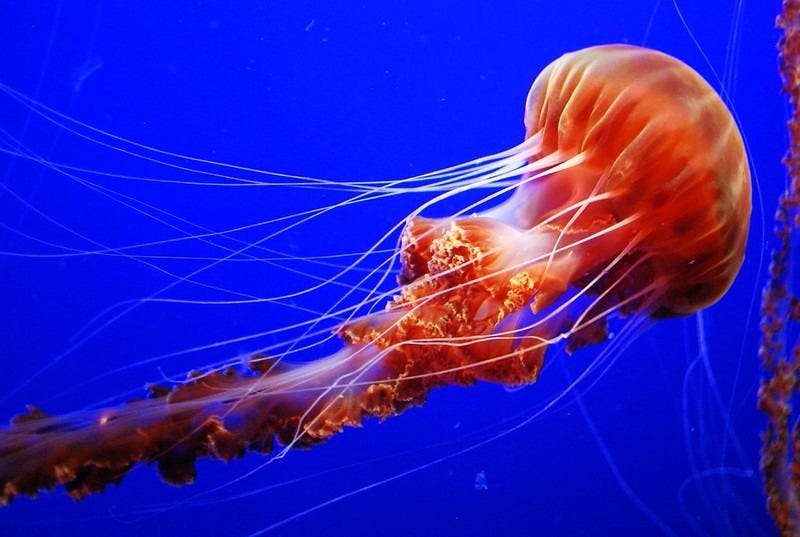
This past summer, just as the weather was warming up enough to swim, Maine’s beaches were suddenly off limits. Unusually large numbers of jellyfish were recorded up and down the coast starting in June. The first ones I noticed on Pleasant Point were red, gelatinous blobs, washed up on shore or floating in Davis Cove. I had no idea what kind they were until the newspaper articles and radio programs started up: Portland Press Herald, The Boston Globe, Maine Public Radio…even the national news media got in on the act when a particularly large specimen was spotted on Willard Beach in South Portland.
These were Cyanea capillata, commonly known as the lion’s mane jellyfish due to their reddish-brown coloring and flowing tentacles. Generally found in the cold waters of our northern oceans, lion’s mane jellies are among the world’s largest organisms. Their bell (the umbrella-shaped body from which the tentacles hang) can grow to up to 6.5 feet wide. Their tentacles can number up to 1,200 and measure more than 100 feet in length (for comparison, the largest Blue Whale ever measured was 110 feet long). Normally most of the larger ones are found well offshore, which is why the five-foot wide specimen on Willard Beach was so notable.
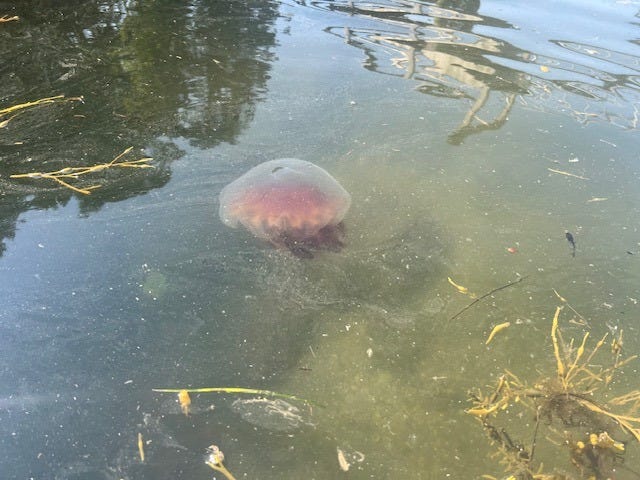
The jellyfish found in the Gulf of Maine are generally harmless, but lion’s manes are an exception. Like most jellies, their tentacles are lined with stinging cells called cnidocytes, and within these cells are nematocysts — microscopic barbs that release a powerful, stinging venom when the tentacles brush up against prey, predator, or a human swimmer. Because of this, the high numbers of lion’s manes in our waters this summer were not only a hazard for beachgoers — fisherman complained of the jellies catching on their lines and tangling their nets, leaving behind a slimy trail of gelatinous tentacles capable of stinging even when the animals were dead.
Their stings can cause pain, redness, or swelling (seek medical help if you have more severe reactions such as nausea or breathing difficulty). If you are an unfortunate victim, the Cleveland Clinic advises that you wash off tentacles and venom with seawater (not fresh water) and remove any visible tentacles with tweezers or gloved hands. You can apply vinegar or rubbing alcohol to neutralize the venom, and use calamine lotion or hydrocortisone cream to reduce pain and itching. Ice packs and hot water can also help reduce pain and swelling. You may have heard that urinating on a jellyfish sting can be helpful, but this is an old wives’ tale and can actually make the symptoms worse.
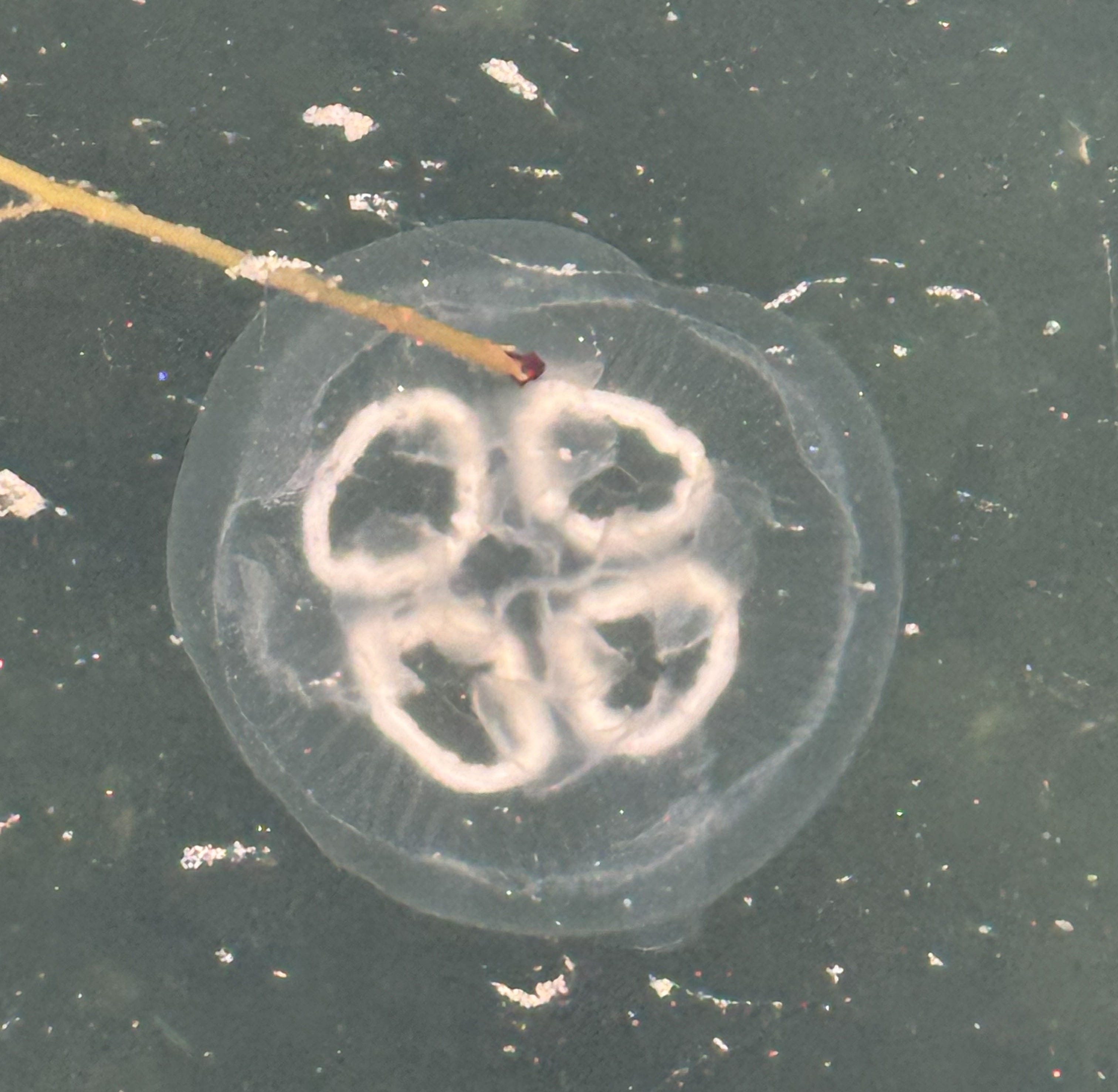
Another species that appeared in multitudes a bit later in the summer was the moon jellyfish, or Aurelia aurita. These are among the most common jellyfish in the world, and make up a substantial part of the diet of seabirds, fish, marine mammals, and sea turtles (sadly, plastic bags in the ocean look suspiciously like moon jellies and are often eaten by accident). Moon jellies float through the ocean like graceful ghosts, their transparent bell making visible simplistic organs including four horseshoe-shaped gonads. Their tentacles are short and fine and produce only a mild sting at most, so they don’t pose the same threat as that of the lion’s mane.
Moon jellies swimming in Davis Cove, June 2025 (image credit: Deb Morgan)
The jellyfish has mystified scientists and writers for two thousand years. They lack a central nervous system, have no heart, lungs, blood. The mature form (medusa) is free floating, but the immature polyps are fixed like plants to rock or sea bed. Are they plants or animals, or something in between? It wasn’t until the 1860s that the scientific community agreed that they were in fact part of the animal world.
Today we know much more about jellyfish, but they are still a source of wonder. They have been on Earth for at least 500 million years (although the fossil record is limited given that they are 90% water and have no bones or other hard parts). They can be found throughout the world’s oceans, in deep water and on the surface. They have a primitive nervous system, some with nerves at the end of their tentacles and others with a “nerve net” that covers their entire body; this allows them to respond to environmental stimuli, governing their movement, feeding behaviors, and reproduction without the need for a centralized brain. Instead of eyes, most species have light-sensitive cells called rhopalia around their bells. The pulsating bell propels the jellyfish through the water, but they are not strong swimmers and are continually at the mercy of winds and currents. Their diet generally consists of small crustaceans, fish larvae, plankton, and algae. Using the stinging cells on their tentacles to stun and capture prey, they then bring it to a hole in the underside of their body which functions as a mouth. Reproductive methods vary among species, but many are able to reproduce both sexually and asexually. The male medusa release sperm into the water and the females release eggs. Meanwhile, in the polyp stage they can reproduce by budding, in which an outgrowth from the polyp breaks off and becomes a new organism.
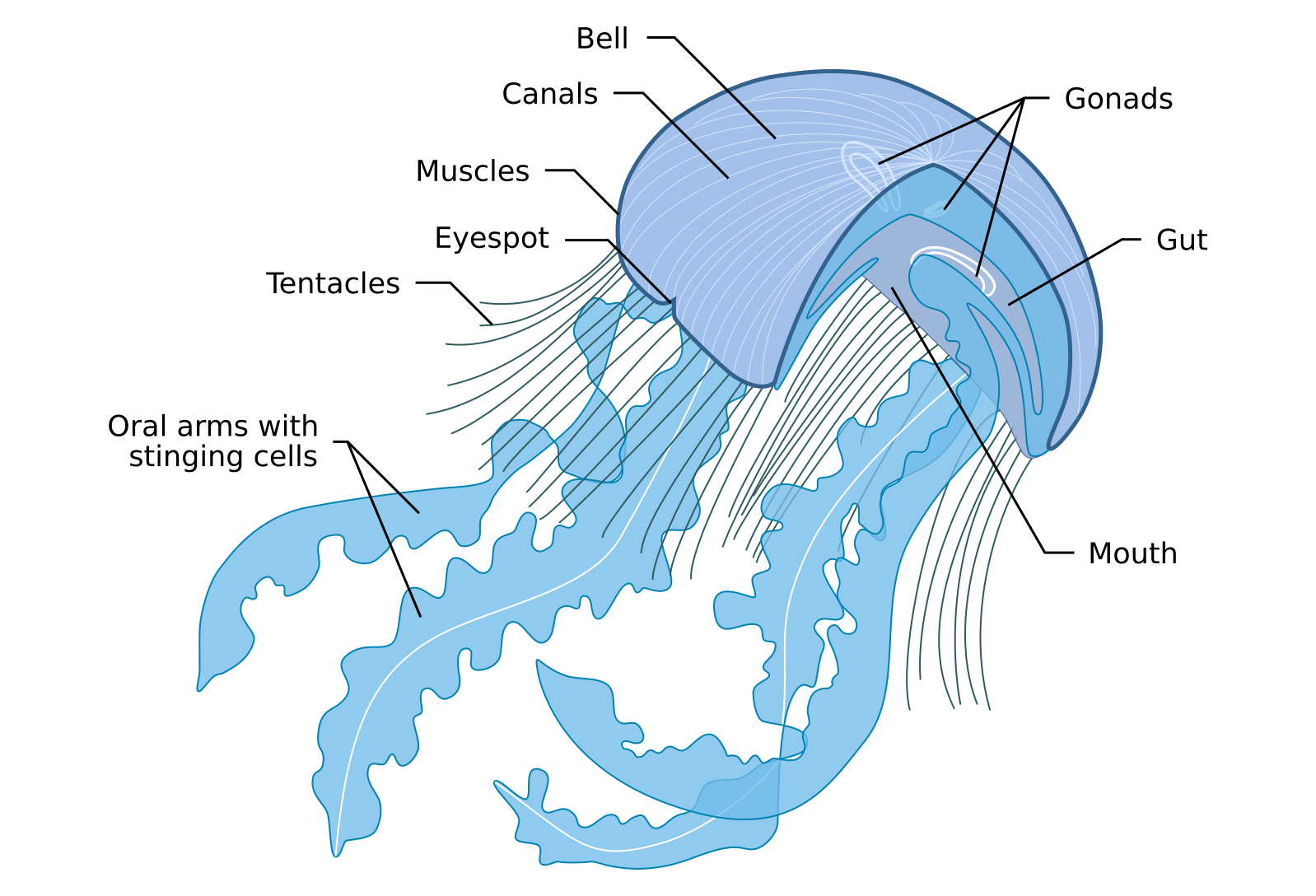
Scientists frequently use jellyfish in their research. The crystal jelly, for example, has a protein that causes it to glow green, and that protein is being used as a fluorescent marker in genetic and molecular research. Scientists studying the evolution of visual systems often turn to box jellies: they have the most complex visual systems of any species, with 24 eyes spread across their bells. Some of these eyes can only see light, while others are similar to human eyes and can detect images.
Sustainable and protein-rich, jellyfish have been deemed a ‘perfect food’ by Australian researchers, and are considered a delicacy in several Asian countries. The flavor is bland but they have a pleasing texture that is simultaneously chewy and crunchy. Asian markets sell dehydrated and processed packets of jellyfish which you can use to make salads.
Scientists aren’t certain why there were so many jellies along the coast of Maine this year, but it has happened before. Spikes in reproductive rates — known as ‘blooms’ — occur every few years, most likely the result of favorable conditions for reproduction and survival (warm water, abundant food, lack of predators). A bloom can then coincide with current and wind conditions that bring the jellies close to shore in large numbers. Climate change may play a part, but other factors could be at work, too. Moon jellies and other species are able to thrive in waters that are acidic or low in oxygen where other marine animals and fish cannot. The lack of predators in those waters means the jellyfish population increases. This may not be the case in the Gulf of Maine, but some jellyfish blooms are therefore an indicator of unhealthy marine conditions. Bigelow Laboratory for Ocean Sciences in East Boothbay has been tracking jellyfish in Maine waters for about a decade in an effort to understand these population swings. Their data comes in large part from citizen scientists; you can report a sighting via email (jellyfish@bigelow.org), or on social media on X (formerly Twitter) with the hashtag #MaineJellies.
- Deb Morgan
Through the Binoculars: Predators on Pleasant Point
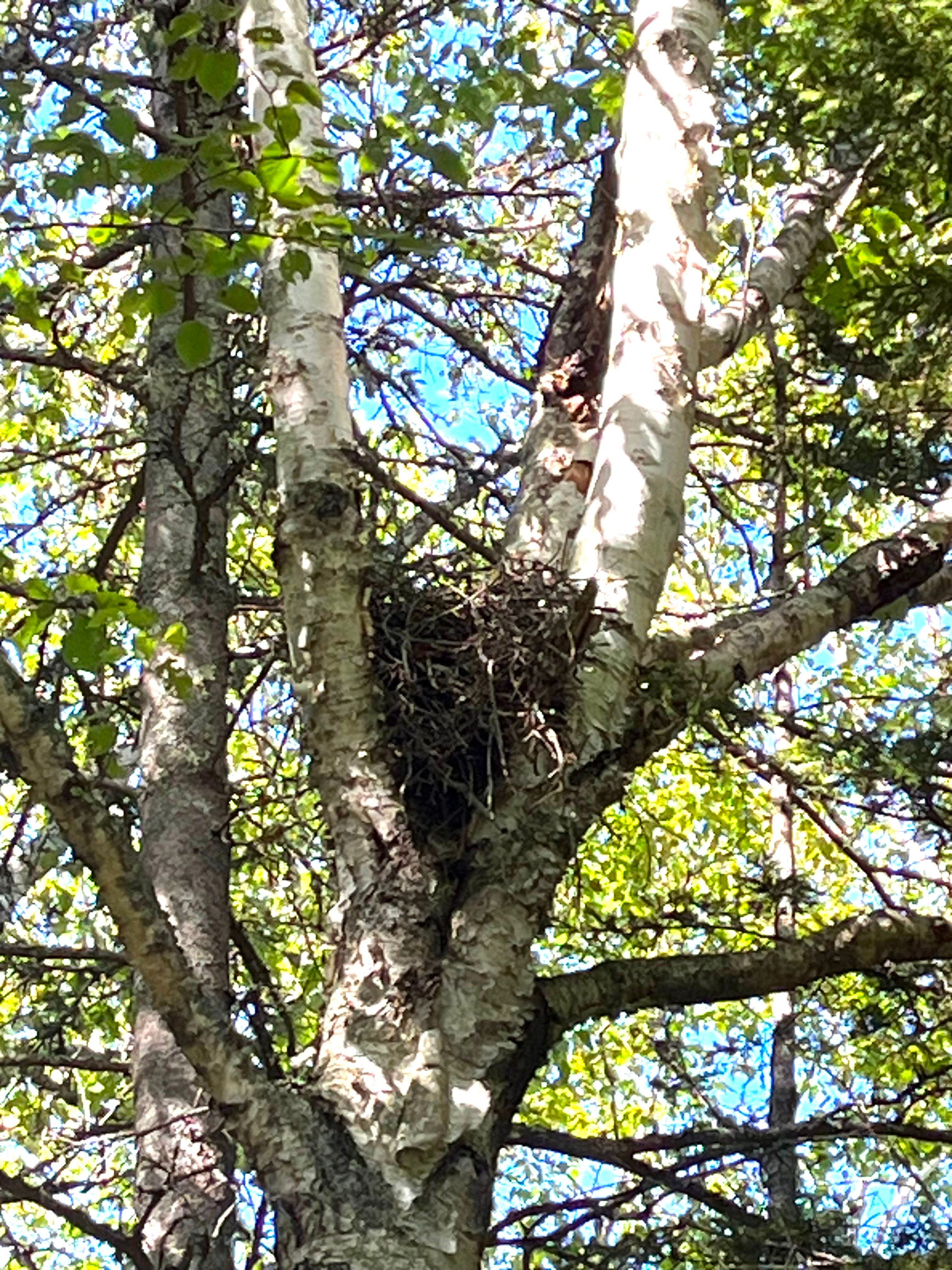
Even as they migrate in groups of thousands back to Central and South America this fall, one family of Broad-winged Hawks (Buteo platyperus) leaves behind an unforgettable impression of its formidable hunting and brooding behaviors here along Davis Cove.
For some years now, a pair of Broad-winged Hawks has taken up residence in the crook of a large birch tree on our lane. Tracking of nesting and migration patterns by scientists at the Hawk Mountain Sanctuary in Pennsylvania indicate that this is not the same pair every year; known as “high fidelity breeders,” hawk pairs tend to stay together but will build a new nest each year in contiguous areas.
At our site, a pair has raised 2-3 chicks each spring in a nest made of sticks, bark and moss. The mother hawk incubates the eggs for a month or so while her male partner supplies a varied diet of small mammals and birds, amphibians and large insects, an arrangement that continues with more mouths to feed for a couple of weeks after the fuzzy white nestlings hatch. Within 5-6 weeks, the young hawks are beginning to fly and hunt on their own. The parents are highly protective of their brood during this period, making a thin, high-pitched whistling call and threatening swoops to anyone who comes near.
This summer, this aggressive watchdog behavior reached new heights of intensity. After returning home in July from an extended trip, we experienced the parents trying to frighten us away with their loud sharp “pee-kee” whistles and dive-bombing swats. On one occasion, they even chased our daughter into a separate stretch of woods across the road, far from their nest. As our presence lingered, they calmed down enough to allow us to check the mail without fearing a sudden attack. Their whistles seemed to become more directed at the crows and bluejays who competed with them for airspace and food.
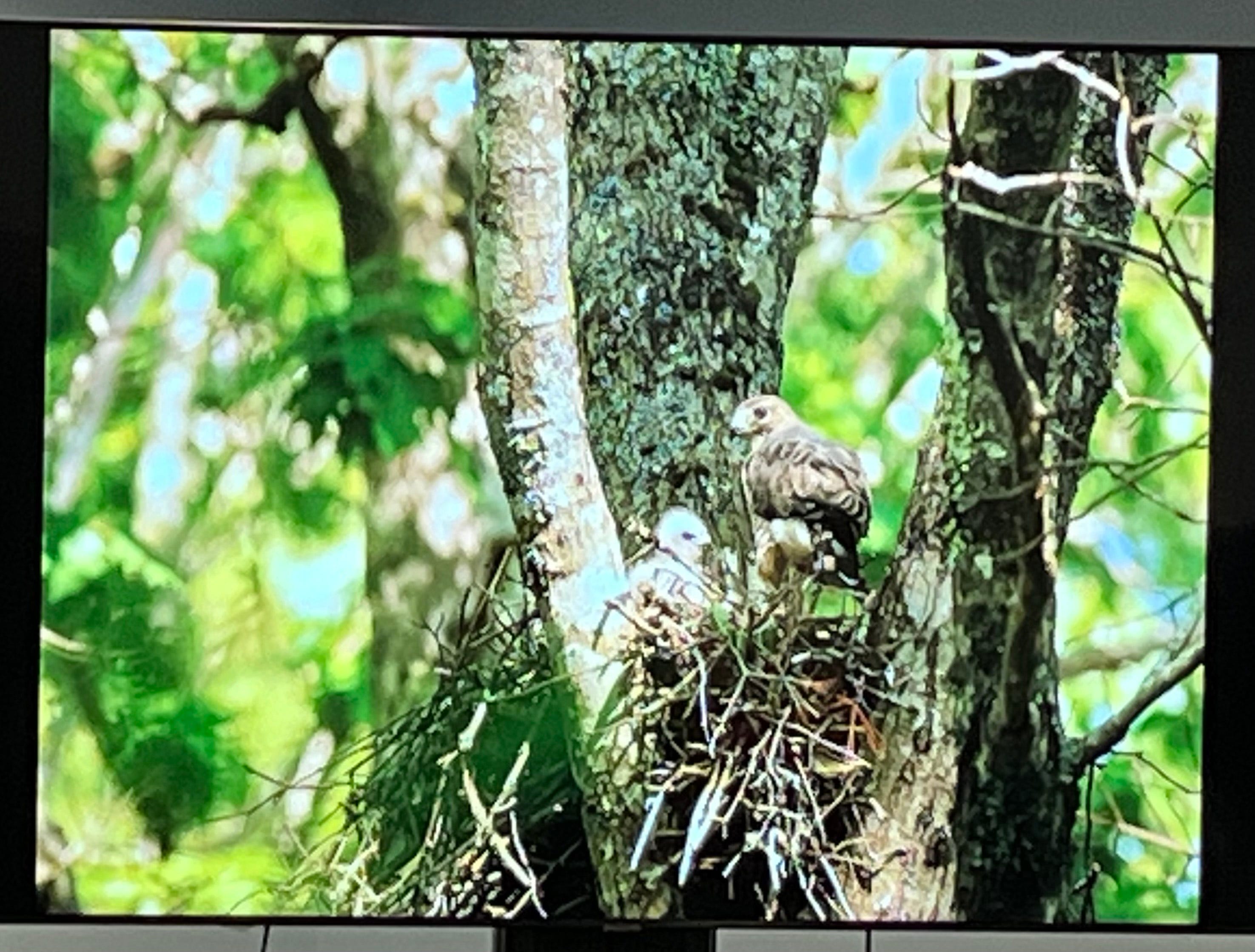
Feeding a family of five is no small task, even with the Broad-winged Hawk’s impressive three-foot wingspan and ability to swoop quickly from their perch to capture a vole in their talons. But as our neighbors down the lane reported, their appetite even for small birds was on full display by August. They watched in awe as the hawks invaded a nest of baby robins, prompting a hysterical panic among their parents and a nearby group of cardinals. Desperate to save their hatchlings from the hungry hawks, the robin parents prematurely pushed them out of their nest, only to watch them bruised and beaten by the fall below. A sad spectacle for some, a full meal for others.
The Broad-winged Hawk, a woodlands species in the Accipitridae family, is common to Maine. It has a brown back and rusty red barring on its chest. Its under-wings are white with black fingertips in flight and its tail is wider and shorter than, for example, the Cooper’s Hawk. Their distinct large-group migrating patterns herald the turn toward spring and fall in places like Hawk Mountain Sanctuary, where up to 13,000 have been identified each migrating season along the Appalachian flyway. By the time they reach the famous Veracruz flyway in Mexico, these groups or “kettles” can include over 500,000 hawks circling above as they concentrate their kettles over long distances. They return each winter to the same general area of forested woodlands in the Amazon, northern South America and Central America, although their exact path of migration often varies from season to season. On these long three-month flights, they rely principally on thermal drafts over land to cover approximately 150-200 miles per day, avoiding large bodies of water that do not offer such wind patterns.
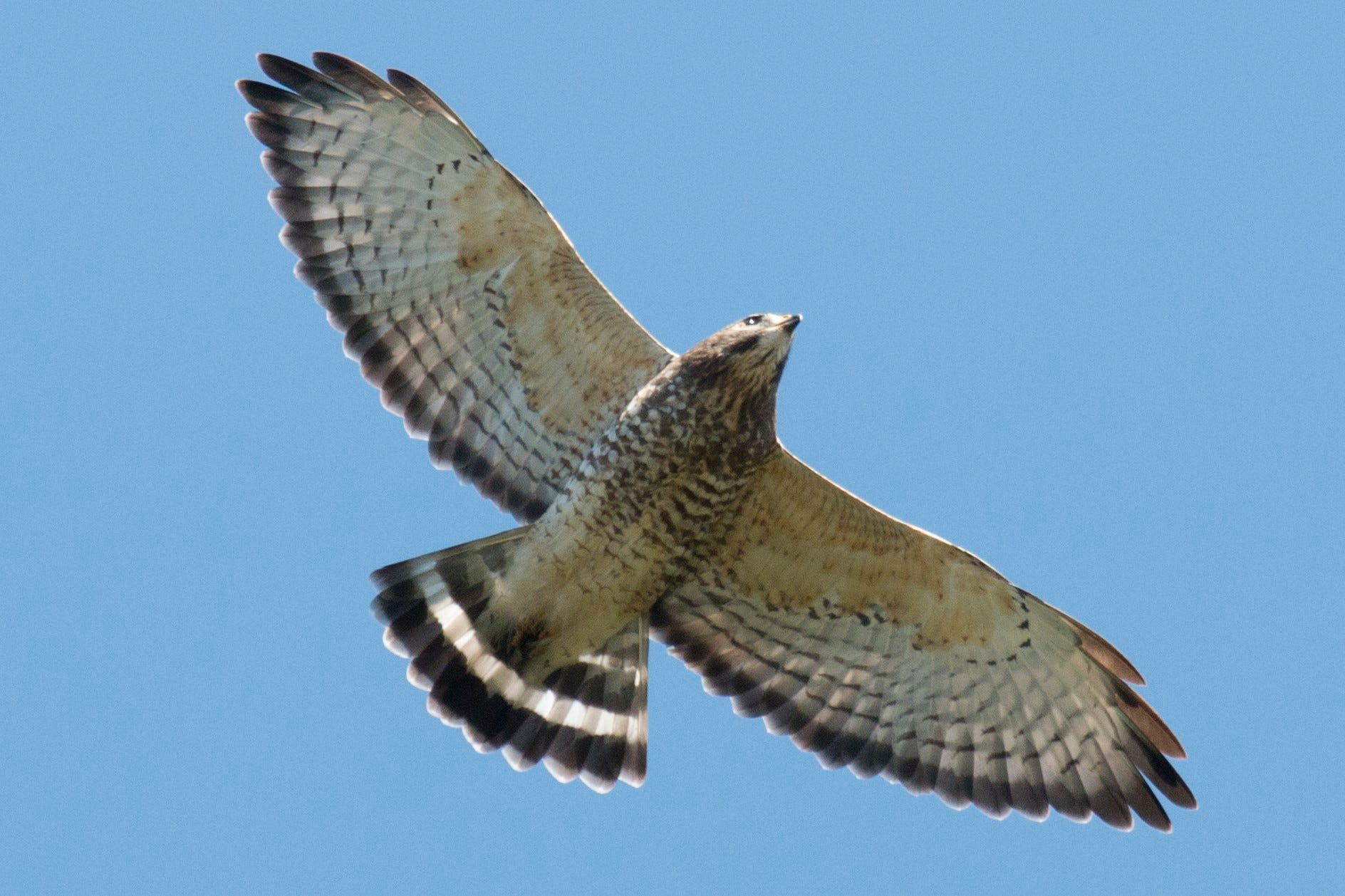
While relatively healthy thanks to legal protections like the Migratory Bird Treaty Act, global broad wing populations today face threats from deforestation due to mining, ranching, and forest fires; shootings in their wintering sites are also a contributing cause, as well as big bird predators such as owls and Red-tailed Hawks. Scientists at Hawk Mountain Sanctuary track their migration and breeding patterns through banding and remote sensors and are eager to expand data collection beyond their current reach in New Hampshire. If you have observations to share, send them to Dr. Laurie Goodrich, Director of Conservation Science at info@hawkmountain.org or 610.756.6961.
Mammalia Q&A: White-tailed Deer
“During the deep and drifted snow of March 1829, a stray deer weighing about 200 pounds was killed in Thomaston….This was the last of these beautiful tenants of the forest slain in its vicinity” (Cyrus Eaton, Annals of the Town of Warren,1877).
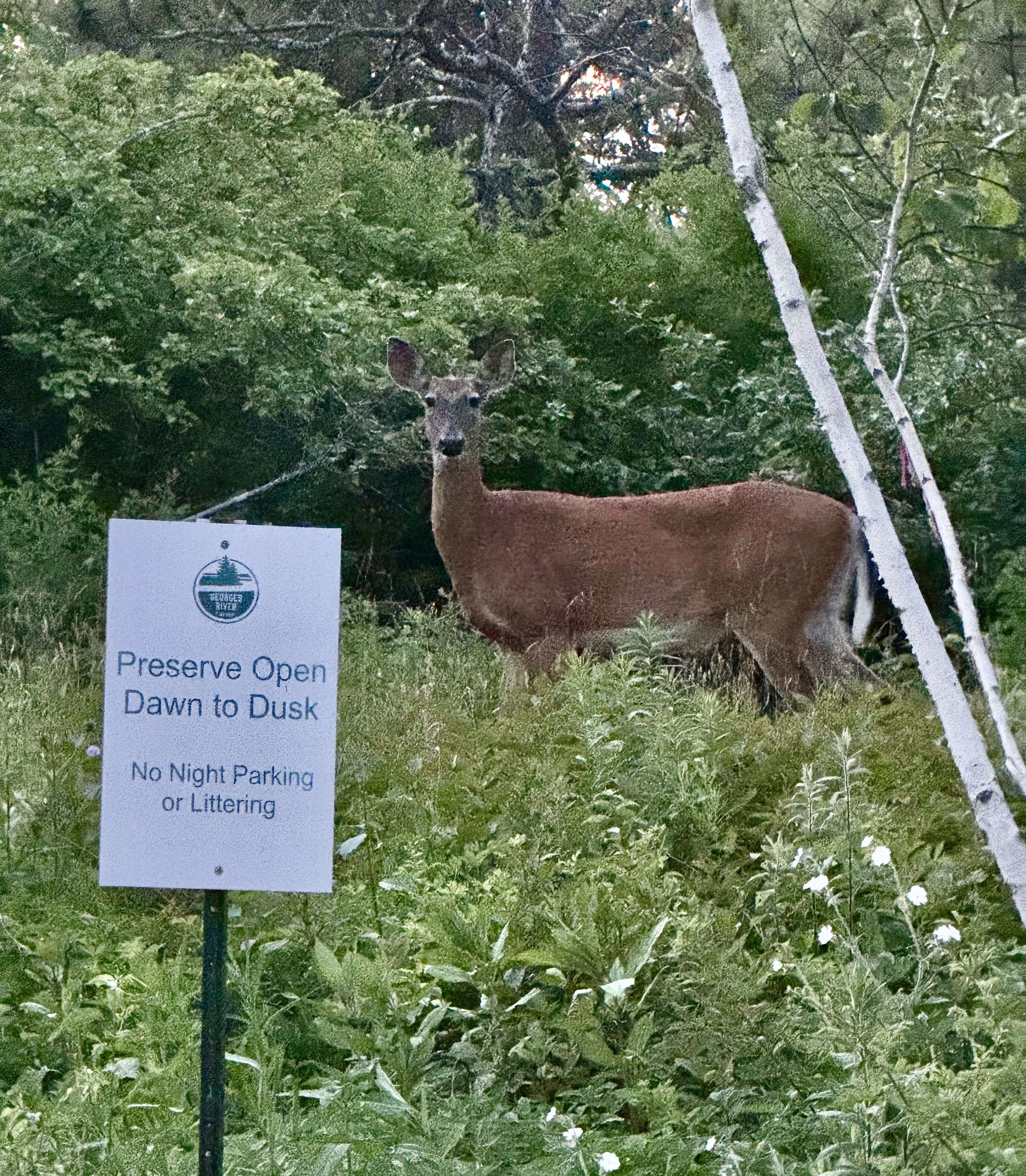
White-tailed deer in Cushing: what are the numbers?
During the past century, white-tailed deer rebounded from near elimination. Recent estimates of the number of deer in Maine suggest an historic peak of over 350,000. You may see white-tailed deer (Odocoileus virginianus) grazing in open areas along River Road and lurking at the edge of woods all the way down the Pleasant Point peninsula. During summer, deer often confine their range to a few square miles. This summer a doe and fawn seem to have favored a patch of woods near the Pleasant Point Nature Preserve, but white-tailed deer are likely present in numbers throughout the town.
Whitetails prefer to forage in deciduous forests, along their edges, and in open fields. They may den up in coniferous forest for cover during the coldest periods in winter. Given the milder winters of late, deer are less likely to linger in our coastal spruce-fir forests, preferring habitats that offer more plants on which to browse. The rut, or mating season, occurs during the fall, and pregnant does deliver fawns about 200 days later. The russet hues of deer hides become gray as their fur becomes thicker and denser for the colder months, and the fawns lose their spots by late summer. While summer fare includes a variety of plants, fungi and acorns, their winter foraging becomes focused on available browse from trees and shrubs.
Maine’s Department of Inland Fisheries and Wildlife monitors overall deer numbers at a large geographic scale (e.g., Wildlife Management District 25 includes much of the Midcoast from Bath to Belfast). Officials estimate deer herd densities of 20-40 deer per square mile for this area, which is considered on the high side, but much lower than may occur on some of our islands or remote mainland areas where exceptionally dense herds (up to 100/square mile) are found.
There are no data on deer herd density at the scale of townships other than the number of hunted deer brought to local tagging stations, so it is difficult to know what the density of deer is for Cushing. In 2024, 58 deer were harvested in Cushing, 54 in Friendship, and 118 in St. George. Other than humans and coyotes, deer suffer no predation. As a general observation, Maine’s coastal peninsular areas often appear to have higher numbers (as one deer biologist put it, “they get down there and then there’s nowhere to go”). Currently, regulated hunting is the primary method of population management in Maine, with seasons for archery and firearms.
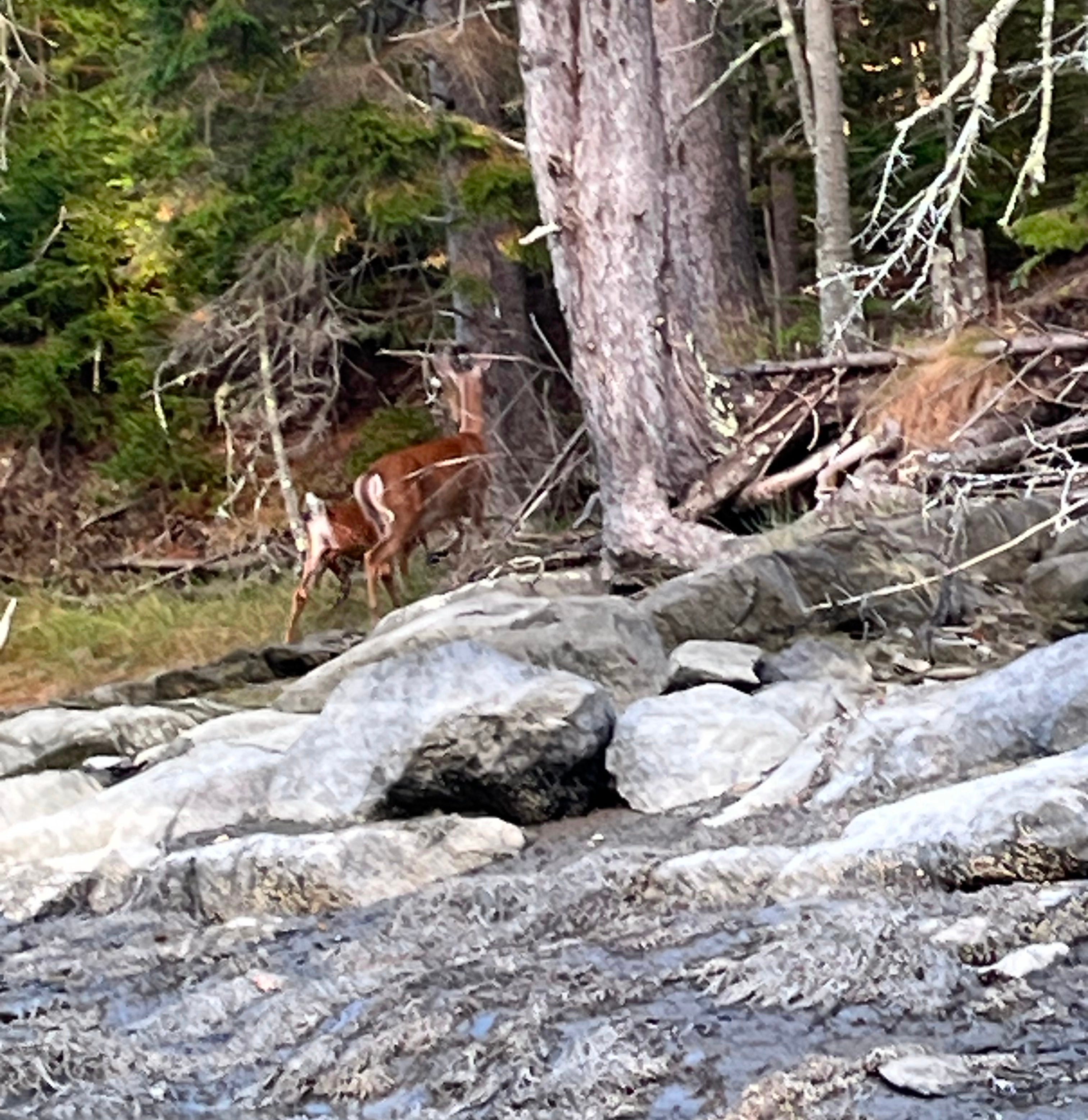
Why did Maine’s deer almost disappear after European colonization — and how did they recover?
Deer bones thousands of years old have been found in Wabanaki shell middens in southern and Midcoast Maine. Deer meat, hides, bones and antlers provided sustenance, tools and clothing, likely for millennia. After European colonization, deer numbers rapidly declined throughout the Colonies (McCabe and McCabe in LK Halls, ed. White-tailed Deer: Ecology and Management. Stackpole Books, 1984). Recent archeological work by Elic Weitzel of the Smithsonian suggests that deer numbers in southern New England plummeted there by the mid-17th century. As colonists carved out small farms, the patchwork of fields and forest edges initially provided ideal deer habitat; eventually farms grew in size and the larger continuous tracts of farmland offered limited shelter, making it easy for landowners to hunt the animals. Weitzel suggests, however, that it was the mercantile pursuit of deer hides for clothing that led to the near extirpation of white-tailed deer. Buckskin breeches were apparently all the rage in England in the 18th and early 19th centuries.
Historical data on deer populations in Maine is limited, but hunting restrictions were first put in place in the 1830s, and became increasingly stringent into the 1900s to allow deer populations to recover. As forests grew back, deer herds replenished, especially with the loss of pre-colonial predators such as mountain lions and wolves. Coyotes and bobcat prey on Maine deer, but to a much lesser extent. It is estimated that the total whitetail population in the country grew nearly 100-fold from 1900 to the present (McCabe and McCabe, 1984). ]
In many areas of Maine, deer populations are considered within an appropriate range for the carrying capacity of the environment where they are often admired simply for their presence. They are graceful animals endowed with remarkable senses of hearing and olfaction (reportedly 50 times more receptors than humans). When pursued, they can clear 8-foot-high structures and cover thirty feet in a single bound. They are the number one big game for recreational hunters, valued for their meat, hides, and antlers.
Exploding deer populations are now a major ecological challenge in much of the northeastern U.S., including suburban areas. Very high numbers exist on a number of Maine’s offshore islands as well as in some southern Maine communities. Overpopulation can lead to destruction of native vegetation, agricultural losses, and the potential for motor vehicle collisions. Ground-nesting birds may be harmed if deer herds outgrow the local resources. The spread of the blacklegged tick (a.k.a. “deer tick”) is linked to the return of dense white-tailed deer herds, with high deer density correlated with tick density in one study in southern Maine.
On Monhegan Island, a small number of deer were introduced in the 1950s but grew into a herd of over 100 by the 1990s. Effects on native vegetation and island gardens were notable. The arrival of the deer tick and associated cases of Lyme disease led to a series of efforts to control the ticks, and eventually forced the removal of deer altogether from the island by 2000. Monhegan Island no longer has a sustaining population of deer ticks present, though occasional ticks may be deposited during bird migration. Native vegetation has rebounded, although scattered thickets of invasive Japanese barberry persist which can provide habitat for the ticks (for a full discussion see Chapter 5 in Art, Ecology, and the Resilience of a Maine Island: The Monhegan Wildlands. Rizzoli Electa, 2024).
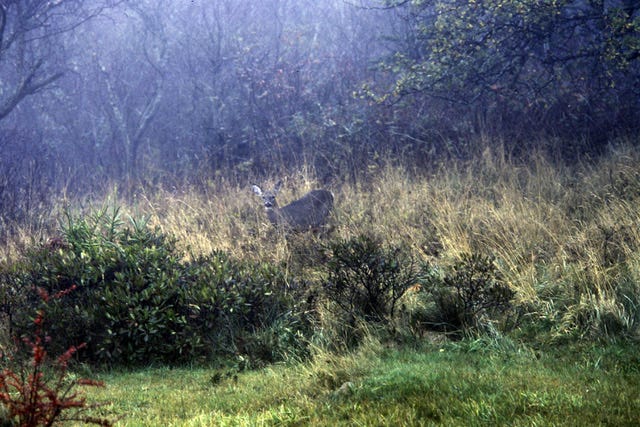
How do I know if deer are frequenting my property?
Deer tend to hide during the daytime and are most often seen at dusk or dawn. Tracks are easy to see after a snowfall as are deer pellets. But if you are not in residence, and you see browsing damage to the new shrubs you planted, look to see whether the browse left a ragged or torn appearance as opposed to a neat slanted cut. Deer lack upper incisors, so they grasp and tear as they feed, as opposed to rabbits or rodents, which make a neater cut.
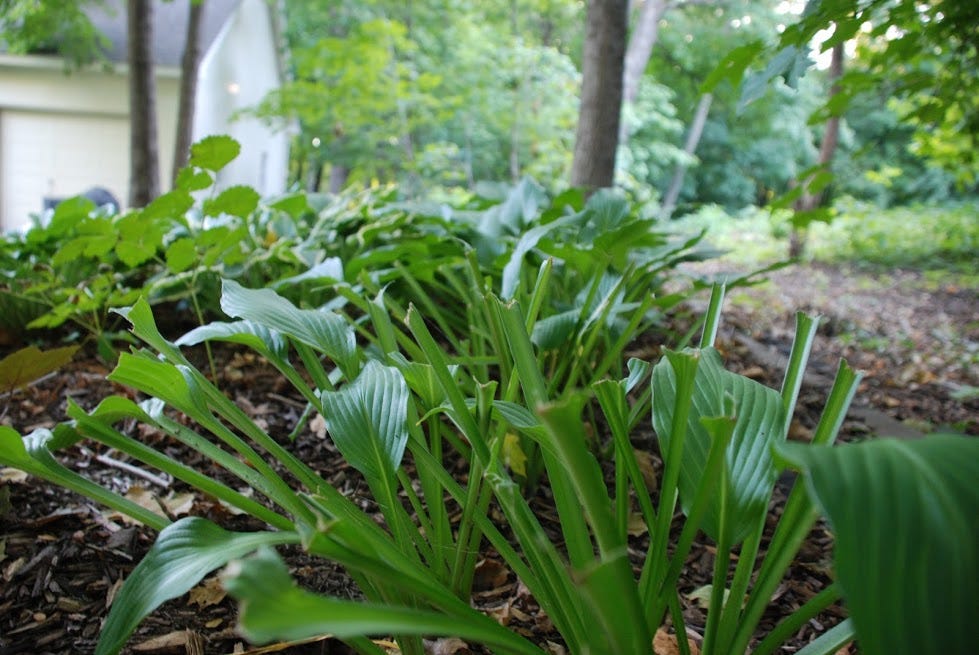
What can I do if deer become a nuisance?
As with most wildlife management issues, the intervention needs to address the particular problem that is of concern. The Maine Department of Inland Fisheries and Wildlife provides a deer management assistance program (DMAP) with an information website, but also can provide assistance tailored to the issue at hand. Deer fencing is of proven benefit for protecting vegetation, as are micro-enclosures around vulnerable vegetation. But for some property owners in our area, the main concern is the presence of deer ticks. Prior work in southern New England and New York demonstrated diminished deer tick populations when large areas are fenced off to exclude deer. This is an expensive and intensive approach. A recent study of the effectiveness of deer exclusion when fencing in properties of six acres or less in southern New England was disappointing. But by most accounts we are not over-run with deer on our peninsula, despite reports now and then of road kills. We can enjoy the occasional deer sightings while protecting vulnerable plants with small enclosures. As for the ticks, we should remain vigilant and take precautions to limit our exposure when working outside (you can find more information in the summer 2024 issue of this newsletter).
- Rob Smith
Eye on Invasives: Japanese Barberry
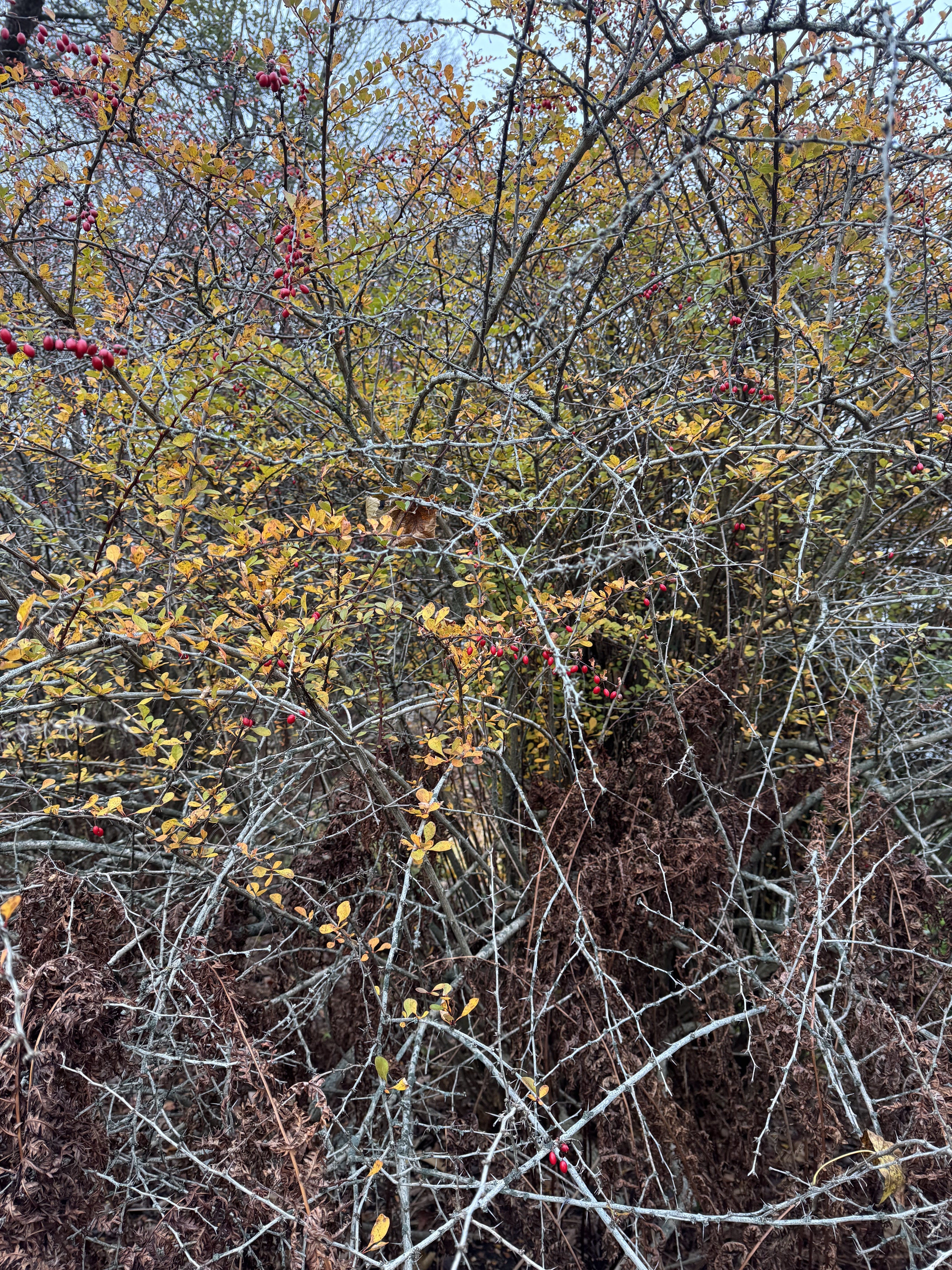
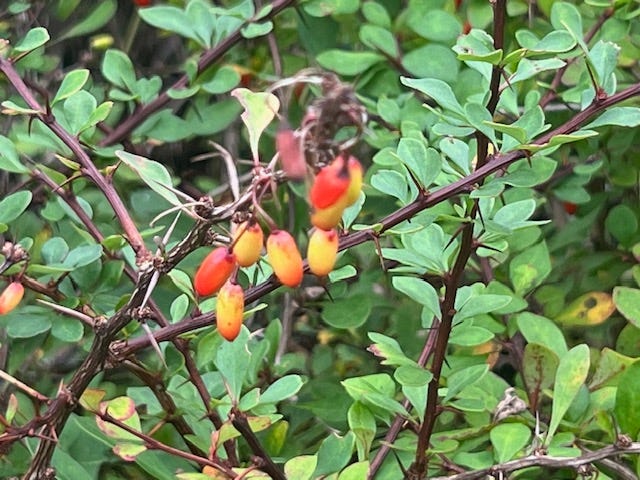
Japanese Barberry (Berberis thunbergii), introduced to North America in 1875 for ornamental use, has displaced our native barberry (Berberis canadensis) and literally run wild over the last century in disturbed habitats, particularly where deer populations are dense. The sale and propagation of Japanese barberry has been banned in Maine and many other states, and it has been labeled “Severely Invasive” by the Maine Natural Areas Program. Unfortunately, various cultivars were planted by homeowners decades ago and the shrub is now common in the Midcoast and even on some of our coastal islands. While its fall berries are colorful, it is a thorny plant that creates thick tangles that crowd out other shrubs. It is difficult, if not impossible, to walk through a thicket of barberry. Perhaps its only attraction is that deer don’t nibble on it, so Japanese barberry has thrived where native vegetation is lost due to browsing by overabundant deer herds.
This is unfortunate, not only because of the loss of more diverse plant communities, but also because its dense vegetative structure provides very favorable conditions for deer ticks (Ixodes scapularis) who thrive in the higher relative humidity and protection from wind and sun that the shrub provides. High populations of these ticks are associated with patches of Japanese barberry in Maine (Lubelczyk et al, Environmental Entomology, 2004; Elias et al, J Medical Entomology 2006). In some sites, the overabundance of deer, which has been correlated with deer tick density, leads to the growth of more Japanese barberry, which then facilitates deer tick persistence — a vicious cycle indeed. An experimental study of the impact of Japanese barberry removal in Connecticut on deer tick numbers demonstrated a marked reduction when compared to control sites. But the intervention needs to be substantial. Attempting to remove a meter or two on both sides of a trail through a dense trailside barberry thicket in Maine proved challenging (only 40% of clumps were successfully removed with same day “cut and spray treatment”) and did not result in lower risk of contact with deer ticks along the trails (Elias et al, Environmental Entomology 2024). That said, preventing the growth of large thickets by regular uprooting of small patches along trails seems sensible (for more information, see our discussion of ticks in Cushing in the 2024 summer issue of Backyards and Backwaters).
Japanese barberry is a prolific seed producer, and birds eat the fruits and spread the seeds widely through their droppings. Shrubs can also spread vegetatively — low branches will root when they come in contact with soil. Removing barberry on your property is tough work but feasible. While shrubs can be cut back to the roots, they regrow quickly and require repeated attention. It’s helpful to remove scattered shrubs before they become a thicket. Small shrubs may be uprooted by hand. Painting the exposed stem with herbicide can kill an entrenched shrub, but mechanical removal is often equally effective. If you do undertake this work, dress appropriately with puncture-proof gloves and outer clothing treated with permethrin. The permethrin is highly effective at killing any ticks that may crawl on your clothing, but it’s still recommended to put it all in a hot dryer after work, and take a shower with a look for any ticks that managed to get through (note that nymphal deer ticks are most numerous from May into August, and adult deer ticks from October through November).
Once the existing plants are removed, consider replacing them with native shrubs such as Inkberry Holly (Ilex glabra), New Jersey Tea (Ceanothus americanus), or Coastal Sweet Pepperbush (Clethra alnifolia). This will deter regrowth of the barberry while allowing more diverse and hospitable plants to take over. If deer frequent the area, consider protecting young replacement shrubs with covers until they are well established. We benefit somewhat by the fact that Maine is at the northern limit of barberry’s range, but a warming climate favors continued northward expansion.
- Rob Smith